|
Zeiss Vario-Sonnar T* 16-80mm f/3.5-4.5 ZA DT ( SAL-1680Z ) - Review / Test Report - Analysis |
|
Lens Reviews -
Sony Alpha/NEX (APS-C)
|
|
Page 2 of 3

Distortion
The Zeiss is a 5x zoom and as such subject to quite high distortion just like the rest of
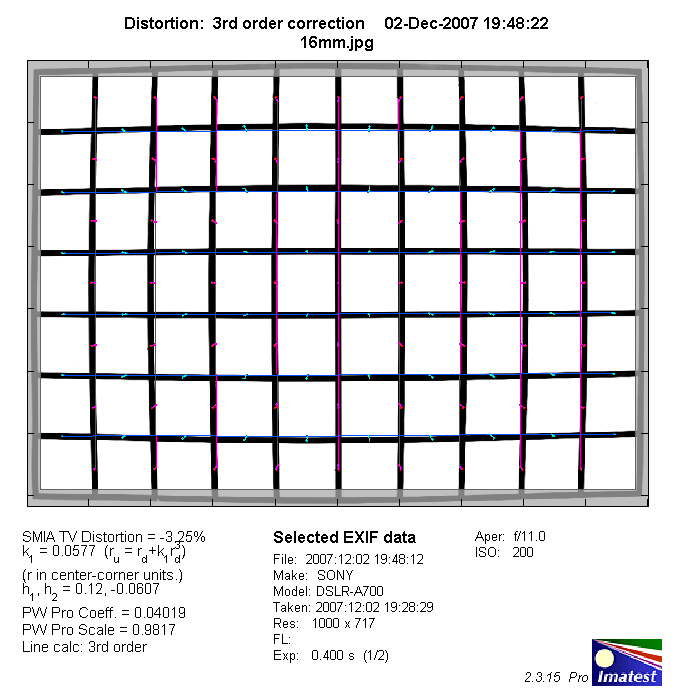
the gang. At 16mm there is heavy barrel distortion (~3.2%). Beyond 16mm the situation eases
significantly with only slight barrel distortion at 24mm and slight pincushion distortion at 40mm and 70mm.
|
Move the mouse cursor over the focal length text marks below to observe the respective distortion
|
| 16mm |
24mm |
40mm |
80mm |
|
The chart above has a real-world size of about 120x80cm.
Vignetting
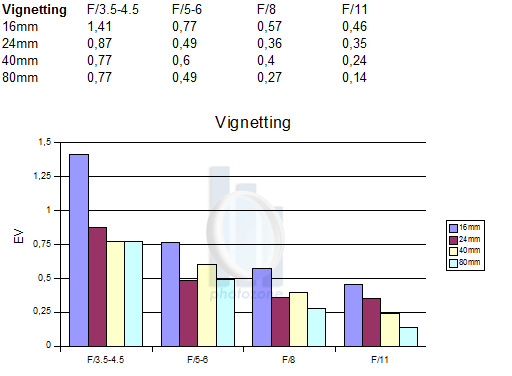
Besides high barrel distortions the lens has a 2nd weakness - vignetting at 16mm @ f/3.5.
At 1.4EV this is a little bit more than expected from a lens in this price league. From f/5.6
onwards the situation is good for a moderate ultra-wide setting. At the other settings the
vignetting is relatively well controlled within its dedicated APS-C scope.
MTF (resolution)
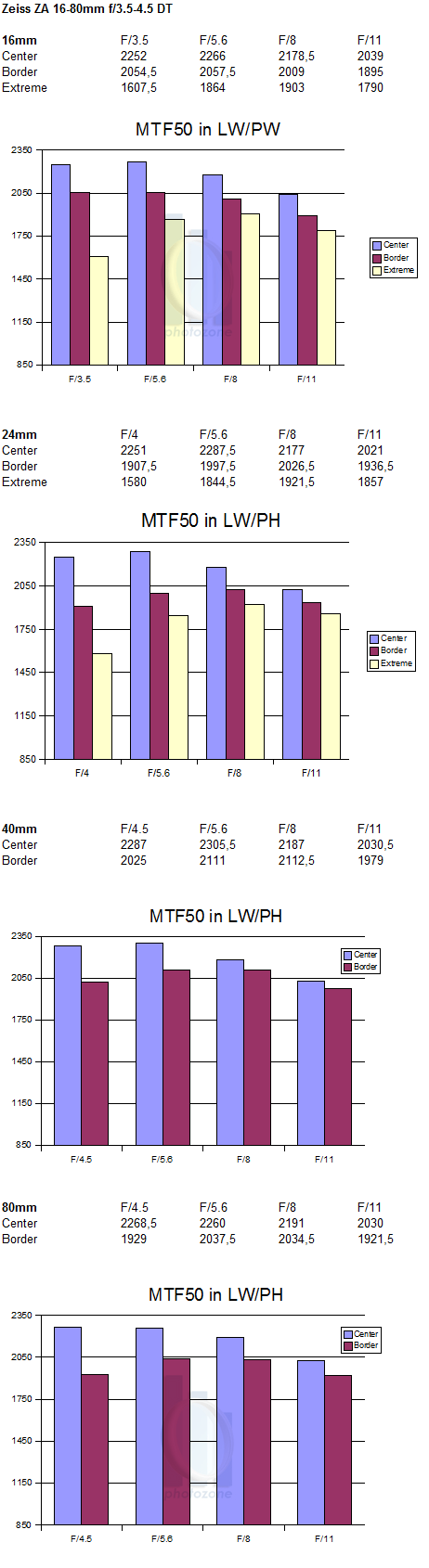
The Zeiss produced very good to excellent resolution figures in the MTF lab.
The center resolution is nothing short of stunning at all focal lengths and apertures.
At 16mm the extreme borders are "only" good at f/3.5 but the quality increases significantly
when stopping down to f/5.6. The local sweet spot is at f/8 with excellent borders and very good
extreme borders. The situation is similar at 24mm. At 40mm and 80mm the border quality increases
further to very good levels at f/4.5 and excellent levels by f/5.6. All in all very impressive.
Some of you may be a bit surprised that the naked LW/PH numbers did not increase between
the former test based on the Alpha 100 and this one based on the Alpha 700. This originates
in the differences of the underlying RAW-converters (ACR 3.7 for the Alpha 100 vs ACR 4.3/LR 1.3
for the Alpha 700).
Please note that the MTF results are not directly comparable across the different systems!
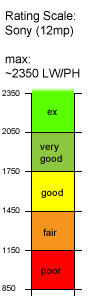
Below is a simplified summary of the formal findings. The chart shows line widths per picture height (LW/PH) which can be taken as a measure for sharpness.
If you want to know more about the MTF50 figures you may check out the corresponding Imatest Explanations
Chromatic Aberrations (CAs)
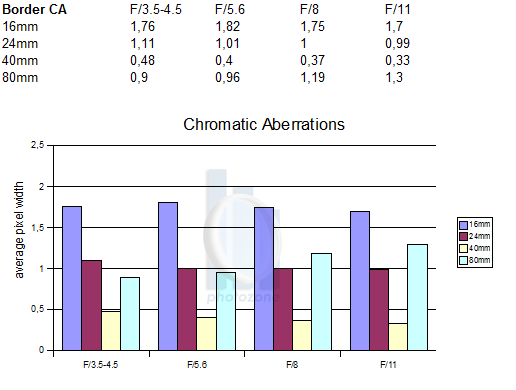
Lateral chromatic aberrations (color shadows at harsh contrast transitions) are
well controlled at and beyond 24mm. However, at 16mm things aren't that rosy
with an average CA pixel width of around 1.7px at the image borders. This can
be disturbing in field images.
Bokeh
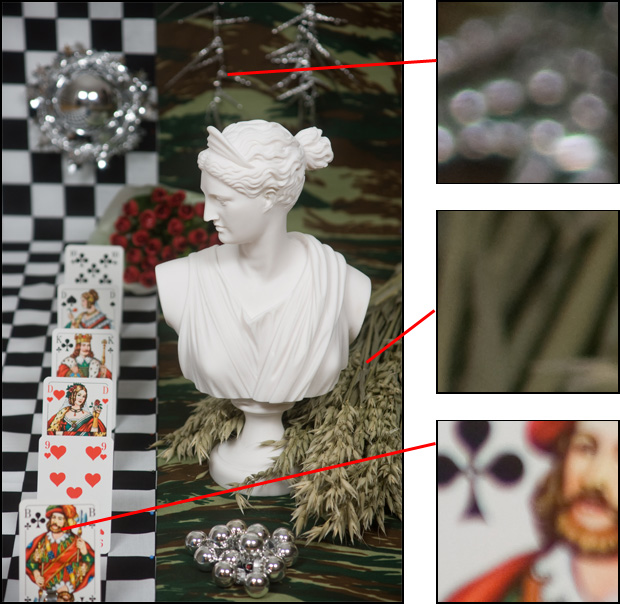
The Zeiss is a rather slow speed lens and the bokeh (the out-of-focus blur) is
therefore usually quite underdeveloped. However, the lens does a fairly decent
job here despite its aspherical element (which often means trouble within this
scope). There's a bit of outlining visible in out-of-focus highlights but it's
not too obvious. The blur is quite uniform and not overly nervous.
You can download the full-size image HERE.
|