|
Tamron AF 200-500mm f/5-6.3 SP Di LD IF - Review / Lab Test Report - Analysis |
|
Lens Reviews -
Canon EOS (APS-C)
|
|
Page 2 of 2
Distortion
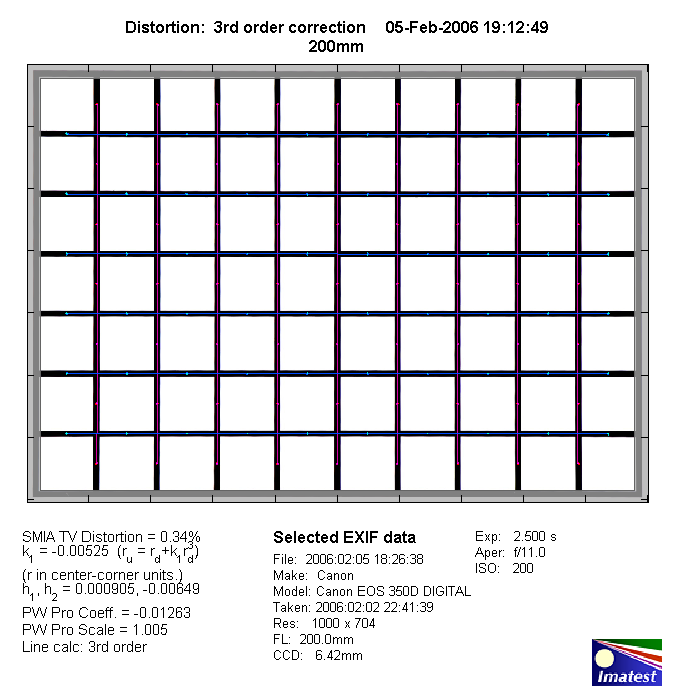
Distortion is exceptionally well controlled with this lens. The level never exceeds
0.5% regardless of the focal length.
|
Move the mouse cursor over the focal length text marks below to observe the respective distortion
|
| 200mm |
300mm |
400mm |
500mm |
|
Vignetting
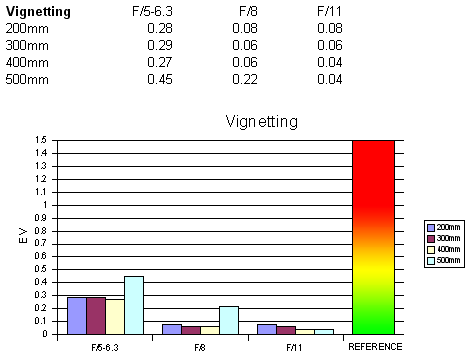
On an APS-C DSLR like the EOS 350D the lens produces very little vignetting. The issue
remains well below 0.5EV at all focal length at wide-open aperture. Vignetting is
marginal in the 200-400mm range and slight at 500mm.
MTF (resolution)
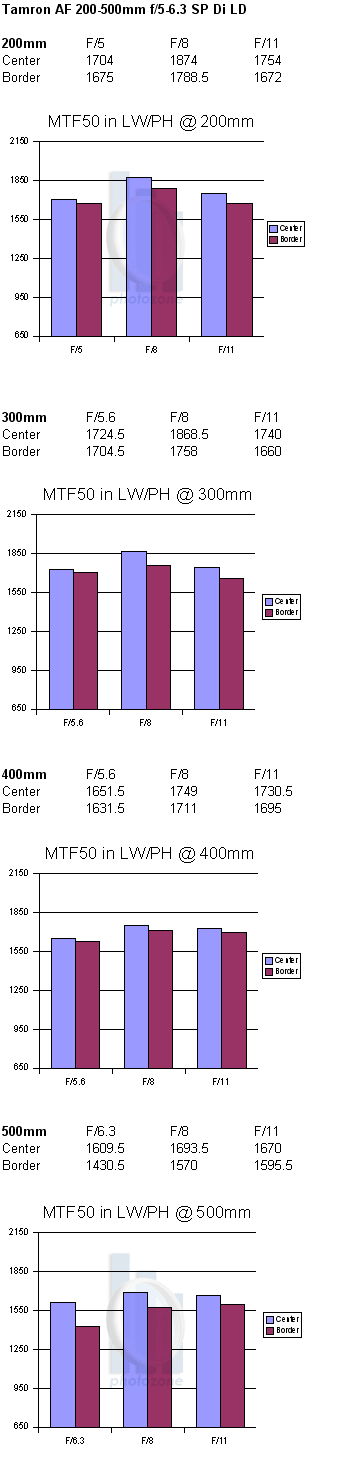
The Tamron AF 200-500mm f/5-6.3 produced very decent performance figures throughout
the entire zoom range which is fairly amazing for an affordable extreme tele zoom.
In the 200-400mm range both the center as well as the borders reside on a very good
quality level. At 500mm @ f/6.3 there's only a marginal decrease in center quality
whereas the border resolution drops to good levels. At f/8 the resolution is very high
across the image field.
Please note that the MTF results are not directly comparable across the different systems!
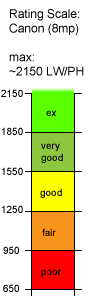
Below is a simplified summary of the formal findings. The chart shows line widths per picture height (LW/PH) which can be taken as a measure for sharpness.
If you want to know more about the MTF50 figures you may check out the corresponding Imatest Explanations
Chromatic Aberrations (CAs)
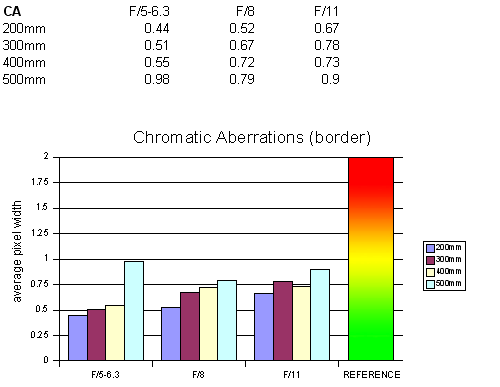
CAs (color shadows at harsh contrast transitions) are generally very low in the
200-400mm range. At 500mm f/6.3 the problem increases significantly to a
maximum of 1 pixel on the average at the image borders - no disaster but
visible at times.
Verdict
The Tamron AF 200-500mm f/5-6.3 SP Di LD (IF) is a very interesting representative
of its (rare) species. The performance figures are generally on a very high level -
very good between 200-400mm and still good to very good at 500mm. The level of
distortions is exceptionally low throughout the range and vignetting is nothing to
worry about on an APS-C DSLR. Add the very good build quality on top combined with
the very moderate price tag and you've an attractive package here. The only thing
that is missing here is an image stabilizer. Handheld photography is often doomed at
such extreme focal lengths due to the need for very fast shutter speeds. An extra
support such as a monopod or tripod is surely a good idea - otherwise you'll waste
much of the quality potential that this lens can give you.
|